Understanding 3D Laser Scanning in London
In the bustling city of London, where architectural grandeur meets intricate urban planning, precise measurement is paramount. One technique that has transformed the landscape of surveying is 3D Laser Scanning London. This advanced technology allows surveyors to capture detailed, high-resolution data of buildings and landscapes, paving the way for innovation in construction, renovation, and preservation projects.
What is 3D Laser Scanning?
3D laser scanning is a non-contact method that captures the physical attributes of an object or environment in a digital format. The technology uses laser beams to measure distances from the scanner to the target, generating vast amounts of data points known as point clouds. These point clouds create a precise three-dimensional representation of the scanned object, allowing for comprehensive analysis and documentation.
Benefits of 3D Laser Scanning for Building Surveys
- Accuracy: Laser scanners provide unparalleled accuracy, often within a few millimeters, which is vital for creating detailed floor plans and elevation drawings.
- Speed: The ability to collect millions of data points in a short amount of time significantly reduces project timelines compared to traditional surveying methods.
- Comprehensive Data: The resultant point clouds capture not only the dimensions of structures but also their features, textures, and even the surrounding environment, leading to more informed decision-making.
- Integration with BIM: Data gathered from 3D laser scanning can be seamlessly integrated into Building Information Modelling (BIM) systems, enhancing project collaboration and efficiency.
Applications of 3D Laser Scanning in Urban Development
In urban settings like London, where new constructions often occur alongside historical sites, 3D laser scanning serves multiple purposes. It is essential for:
- Renovation Projects: By creating a detailed model of existing conditions, architects can plan modifications with a clear understanding of the original structure.
- Heritage Conservation: Historic buildings can be accurately documented, allowing for preservation efforts that respect the original designs while accommodating modern needs.
- Construction Planning: Site assessments using 3D laser scanning can help identify potential challenges and streamline the construction process.
Key Technologies Driving 3D Laser Scanning
Advanced Equipment Used in 3D Laser Scanning London
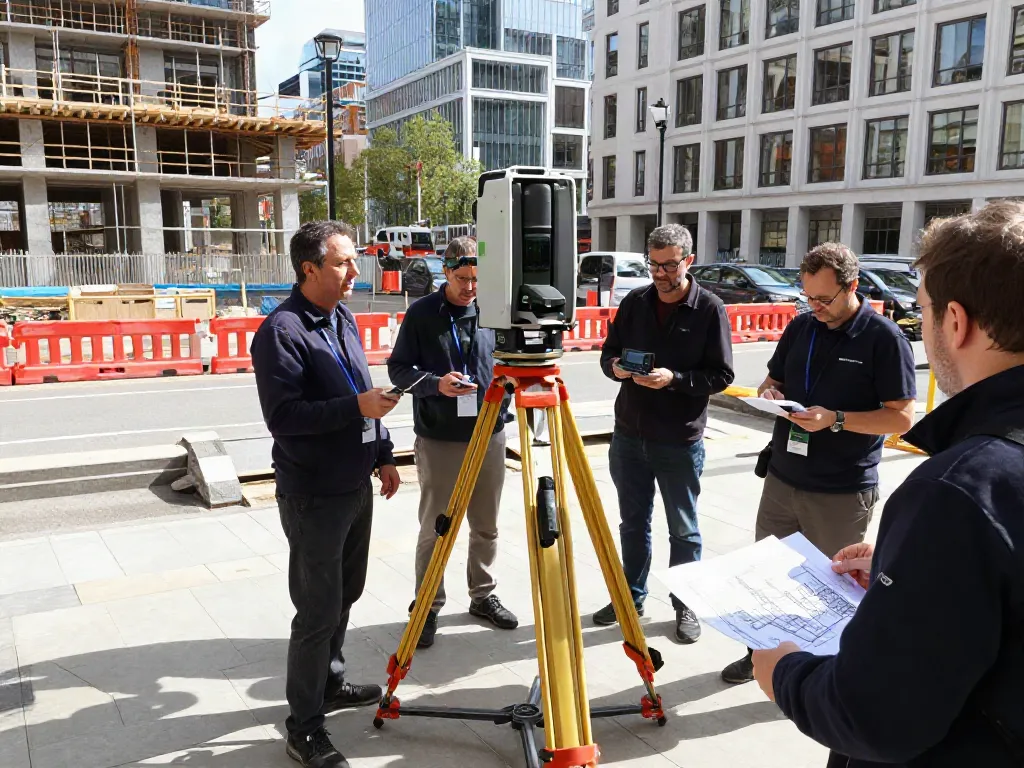
The effectiveness of 3D laser scanning relies heavily on the equipment employed. Professional-grade scanners, such as terrestrial laser scanners, mobile mapping systems, and drone-mounted lasers, offer varying advantages:
- Terrestrial Laser Scanners: Ideal for stationary scanning of buildings, these devices can capture intricate details with high accuracy.
- Mobile Mapping Systems: These allow for the rapid collection of data while moving, making them suitable for urban environments.
- Drones: Equipped with laser scanning technology, drones can access hard-to-reach areas, providing valuable data for large-scale projects.
The Role of Software in Data Interpretation
Once the data is captured, powerful software tools are required to process and analyse the information. Software such as Autodesk Revit, Cyclone, and 3D Reshaper enables surveyors to convert point clouds into usable models, allowing for detailed analyses, visualisation, and integration into design workflows.
Comparing Traditional Surveying with 3D Laser Scanning
While traditional surveying methods, such as total station measurements and manual drafting, are still in use, they often pale in comparison to the efficiency and accuracy offered by 3D laser scanning:
- Time Efficiency: 3D laser scanning eliminates the need for lengthy manual measurements and reduces time spent on-site.
- Data Density: Traditional methods can only capture limited data points, whereas laser scanning provides millions of points, leading to richer information.
- Reduced Errors: The likelihood of human error is significantly lower with automated scanning processes.
Challenges in Implementing 3D Laser Scanning
Common Misconceptions about 3D Laser Scanning
Despite its advantages, there are misconceptions regarding 3D laser scanning. Some may believe that it is overly complex or only suitable for large projects. In reality, it is adaptable for various project sizes and can be user-friendly with proper training.
Managing Costs and Budget Considerations
The initial investment in laser scanning equipment and software can be substantial. However, when considering the long-term savings achieved through efficiency and reduced rework, many projects find it to be a cost-effective solution. Budgets should account for both equipment and trained personnel to maximise the technology's benefits.
Overcoming Technical Limitations during Scans
Environmental factors like weather conditions, light interference, and physical obstructions can affect scanning accuracy. It is crucial for surveyors to plan and prepare adequately, ensuring optimal scan settings that account for such variables.
Future Trends in 3D Laser Scanning
Innovations on the Horizon for 2026
As technology continues to evolve, innovations in 3D laser scanning are on the horizon. The integration of higher resolution sensors, more portable devices, and improved data processing capabilities is expected to enhance both the quality and accessibility of laser scanning services.
Integrating AI and Machine Learning in Surveying
Artificial Intelligence (AI) and machine learning are set to revolutionise the analysis of scanned data. These technologies can help automate processes, improve accuracy in model generation, and even assist in predictive analytics for project outcomes.
Environmental Considerations in Urban Surveys
As sustainability becomes a focal point in urban development, the synergy between 3D laser scanning and environmental impact assessments will likely grow. This includes assessing natural landscapes and their interaction with human developments, paving the way for more responsible urban growth.
Engaging Case Studies of 3D Laser Scanning in London
Notable Projects Utilizing 3D Laser Scanning
Many prestigious projects in London have leveraged 3D laser scanning to enhance their design and execution. Notable examples include:
- The Shard: Laser scanning was used to create an accurate model of the tower during its construction phase, ensuring structural integrity and alignment.
- The Tate Modern: The museum utilized 3D scanning for renovations, allowing for a seamless integration of modern design with historical elements.
- Crossrail Project: The massive infrastructure project employed 3D laser scanning for survey accuracy in challenging underground conditions.
Success Stories from Various Industries
From architecture to construction, companies across industries are reaping the benefits. For instance, architects have reported improved collaboration and design accuracy, while contractors have experienced fewer delays and enhanced safety on-site.
Lessons Learned and Best Practices
Throughout various implementations of 3D laser scanning, several best practices have emerged:
- Thorough Planning: Preparing a detailed plan for scanning can mitigate many common on-site challenges.
- Training Personnel: Ensuring staff members are adequately trained in both operation and data interpretation maximises the technology’s effectiveness.
- Collaboration: Engaging all stakeholders early in the process fosters a more holistic approach to project design and execution.
How can 3D Laser Scanning improve my project?
By providing accurate, real-time data, 3D laser scanning can enhance project planning, reduce errors, and facilitate better decision-making. This leads to improved efficiency and cost-effectiveness across various stages of a project.
What are the limitations of 3D Laser Scanning?
Some challenges include initial setup costs, the need for skilled operators, and occasionally prolonged data processing times. However, these are often outweighed by the benefits provided, especially in complex projects.
How does 3D Laser Scanning enhance architecture?
It allows architects to visualise and analyse existing structures accurately, ensuring that new designs cohere with their surroundings, thereby crafting spaces that are both functional and aesthetically pleasing.
Is 3D Laser Scanning more expensive than traditional methods?
While the upfront costs may be higher, the long-term benefits and savings gained from improved accuracy and reduced project delays often compensate for the initial investment.
What qualifications should I look for in a 3D Laser Scanning provider?
Look for providers with substantial experience, relevant certifications, and a portfolio of successful projects. Proficiency in both the technical aspects of scanning and data processing is crucial for achieving optimal results.